
The Flagpole Vol 10: Why Do Good Plans Die?
There’s a specific kind of rush that comes from seeing your niche show up somewhere unexpected. When a (relatively) mainstream podcast stumbles into the world you’ve spent your career in, and you are suddenly nodding along and furiously texting friends the link seeking some sort of validation.
That happened to me recently with an episode of the podcast Hyperfixed.
Hyperfixed is a show where the host finds someone who has become so singularly obsessed with solving a problem that they throw everything they have at it. It’s a show about the kind of people who can’t let things go.
I find that deeply relatable, which is both maybe a good sign for my professional life and a mild warning about my personality.
When I saw a recent episode was about tactical urbanism and street safety, I was genuinely excited (perfectly normal things to get excited about, right?). Tactical urbanism, the concept of using short-term and low-cost interventions to test long-term infrastructure improvements, has been a professional obsession of mine for a long time. I once ran the website “Tactical Urbanism Here” that mapped interventions happening across the country, which, if you’re wondering, is exactly as niche as it sounds.
One of the professional projects I’m most proud of, the Square on 21st, was itself a tactical urbanism demonstration, reclaiming a 21st street in Downtown Denver as a temporary urban park to prove what was possible before anyone had to commit to making it permanent. In other words, we temporarily turned a street into a park and then politely hoped the community would realize it liked it that way (turns out the community loved it but not enough is the City’s eyes to make it permanent).
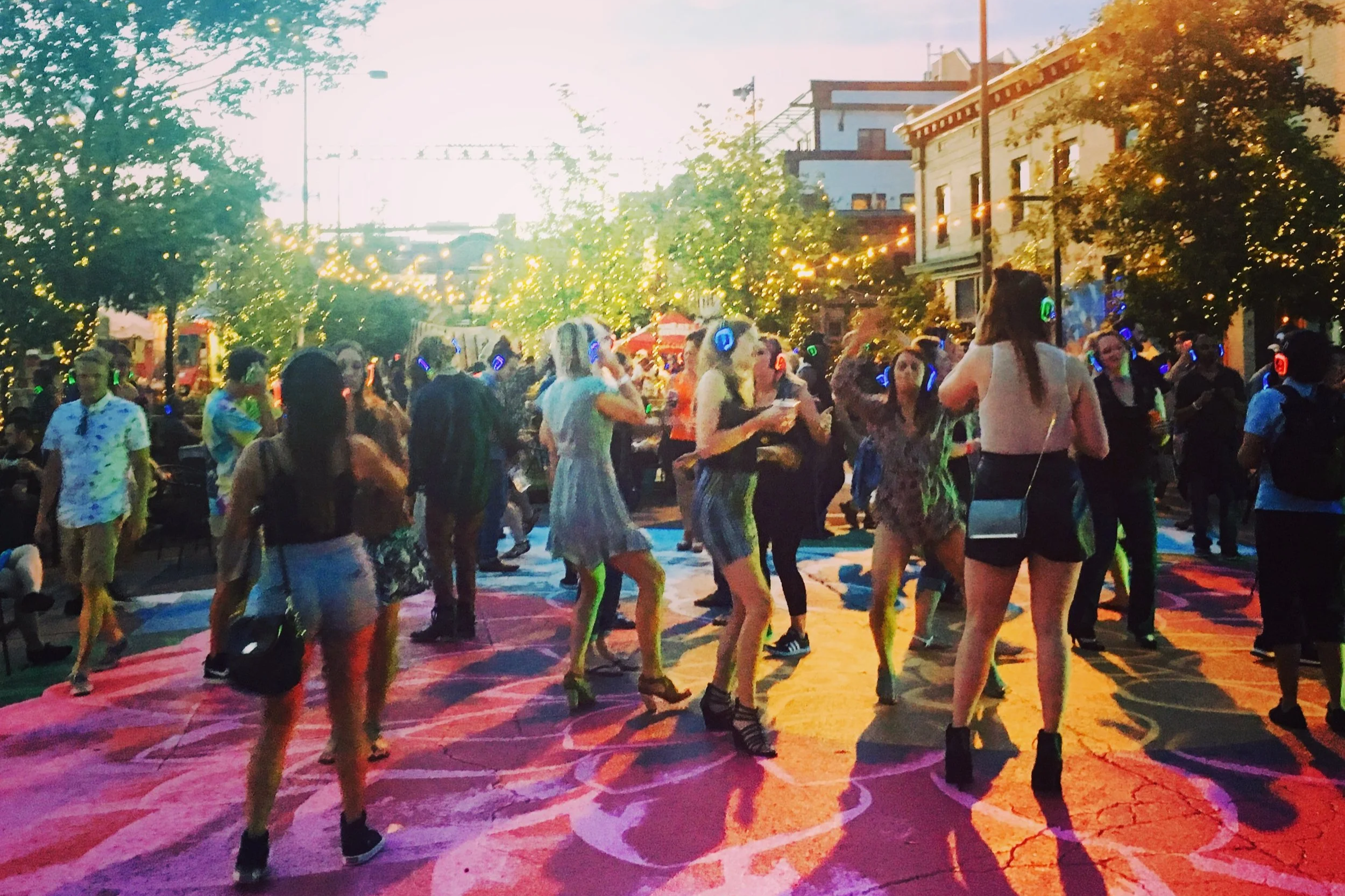
Two months of proof that a street could be something better. The Square on 21st, Summer 2018
Two months of proof that a street could be something better. The Square on 21st, Summer 2018
So when a podcast I listen to stumbles into this world and tells the story through one determined person, I pay attention. The episode is about Crosswalk Jonny.
Jonny is a law student in Los Angeles who got so frustrated with his city’s failure to implement its own street safety plan that he started painting crosswalks himself. Not rogue, chaotic crosswalks but code-compliant ones at intersections where people had been killed by people driving cars. LA, like Denver, had committed to fixing these streets a decade earlier under a program called Vision Zero. The plans existed. The funding existed. And still nothing happened (kind of like Denver, but more on that later).
So Jonny decided to do it himself, got arrested for vandalism, wore a reflective vest and a floppy hat, posted the video, got twelve million views, and ended up meeting with the mayor’s office. As origin stories go, it’s a pretty good one.
The plan wasn’t the problem. It rarely is. The problem was the gap between the plan and the street, and the complete absence of any urgency to close it. As former Denver Planning Director Peter Park likes to say, “To plan is human, to implement, divine”.
Jonny closed that gap with a bucket of (code-compliant) paint.
Death by Inaction
LA’s Vision Zero plan was real, and the safety case was strong. Like most urban areas, cars were the leading cause of death for children in the city. Two consecutive years saw more traffic deaths than homicides. And yet the city’s own audit found that the plan had failed due to a lack of institutional urgency, failure to coordinate between departments, and a general unwillingness to do things that might be politically unpopular (sounds familiar). Hundreds of thousands of dollars of planning to learn that nobody wanted to do their job. Incredible.
That’s not a planning failure. That’s a political will failure. The plan died not because it was wrong but because nobody was willing to fight for it hard enough to see it through.
Death by Process
Denver has its own version of this story, though it looks a little different.
Alameda Avenue has been one of the city’s most dangerous streets for pedestrians for years. The city knows it. They spent years developing a redesign, running community process, building the safety case, and getting the design shovel-ready.
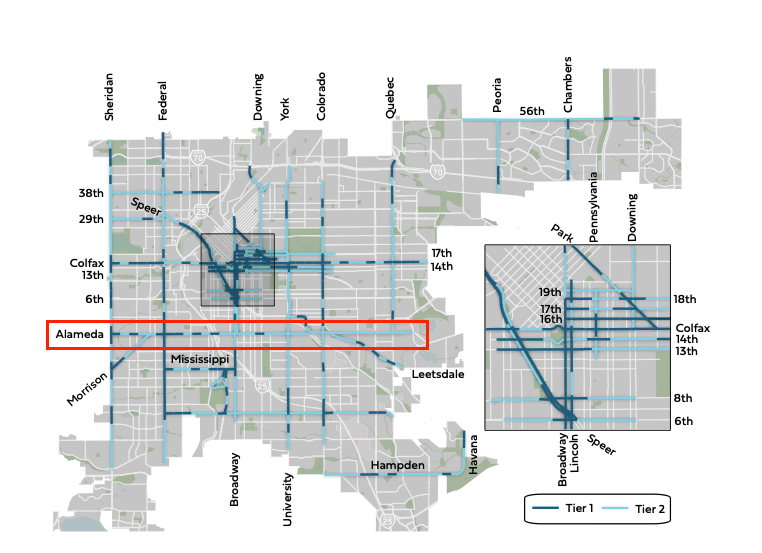
Denver’s High Injury Network from the 2022 Vision Zero Action Plan
The opposition wasn’t broad or grassroots but rather specific and well-connected. The most influential voices in the process are primarily residents of gated communities along the corridor, worried primarily about how difficult it may become to turn out of their exclusive enclave. One of those communities, where average home prices exceed $4,000,000, has never bothered to build a sidewalk along its stretch of Alameda. The people most resistant to making the street safer for pedestrians were the same people who had opted out of providing pedestrian infrastructure in the first place. You really can’t make this stuff up.
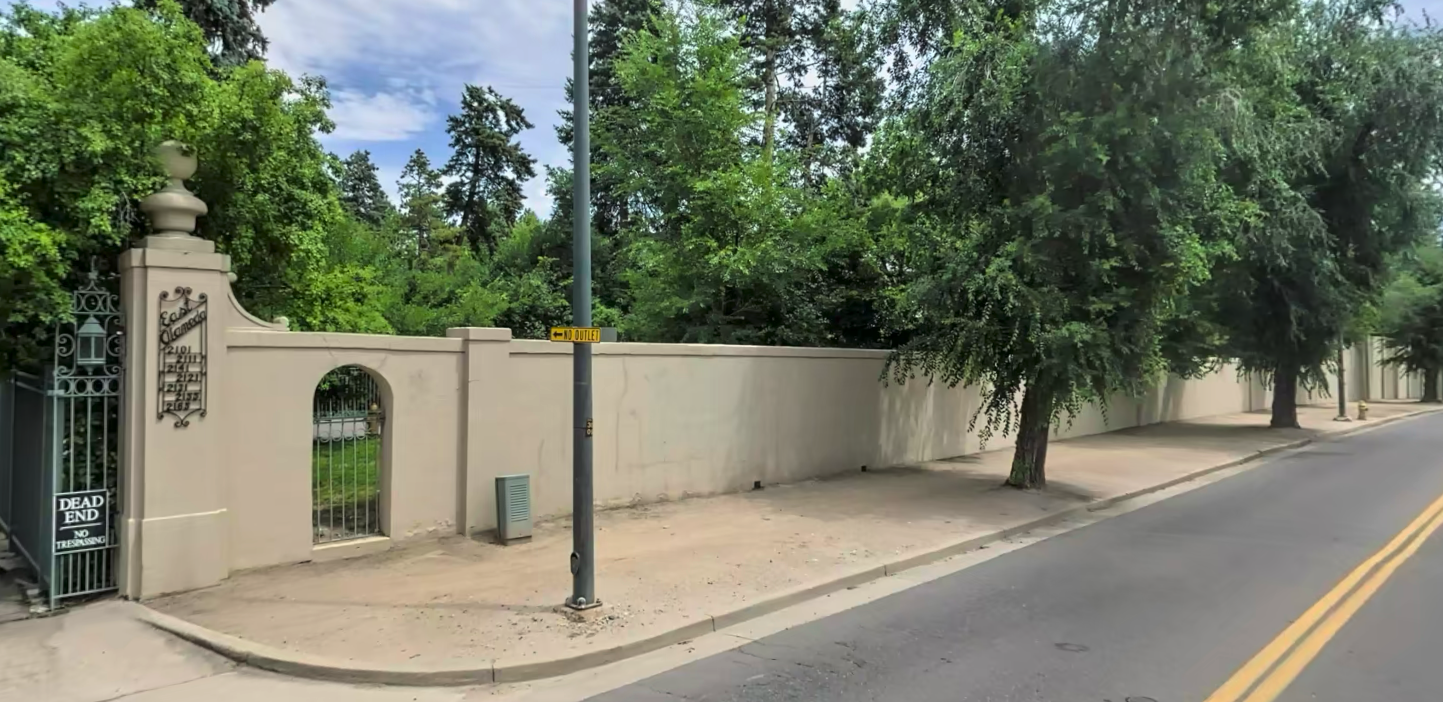
2010 E. Alameda St. — No trespassing. Also no sidewalk.
That detail says everything about how this kind of failure happens. It’s not about facts or safety or community process. It’s about who has access to power and when they choose to use it. The plan didn’t die because it was wrong; it died because the process had no way of holding up against a well-connected opposition.
What makes these two failures so interesting side by side is that they’re not quite opposites. LA’s problem is an absence of political will. Nobody wanted to make the kind of hard call of painting some crosswalks. In Denver, there is plenty of political will; it just went in the wrong direction in Alameda’s case. The city responded quickly and decisively to the most connected voices in the (back)room. Political will isn’t inherently good. It depends entirely on whose interests it’s serving.
In LA, the system failed through paralysis. In Denver, it failed through responsiveness…just to the wrong people.
The Diagram That Never Lived
These are two different failures, but they point to the same broken thing — a planning framework that is extraordinarily good at producing plans yet extraordinarily bad at seeing them through. A process that spends years building consensus and then has no way of holding that consensus together when it gets challenged.
Everyone knows Daniel Burnham’s most famous line. But the part that stays with me is what follows it:
“Make no little plans. They have no magic to stir men’s blood and probably themselves will not be realized. Make big plans; aim high in hope and work, remembering that a noble, logical diagram once recorded will never die, but long after we are gone will be a living thing, asserting itself with ever-growing insistency.”
He wasn’t just talking about thinking big. He was talking about the power of a vision made visible. Something people could hold onto. Something that outlasts the person who made it.
Imagine if LA’s Vision Zero plan had become that kind of living thing. Not a static PDF buried on a city website but something felt in the community, visible on the street, human enough that twelve million people didn’t need a viral video to understand what was at stake. Jonny wouldn’t have needed a paintbrush, or to get arrested. The urgency would have already been there.
Imagine if Denver’s Alameda redesign had become that kind of living thing. A vision so clear and so felt that when the opposition organized around fear and delayed left turn movements, there was something real for people to hold onto in return. Not a technical document. A story. A picture of what the street could be that was more powerful than the fear of what it might cost.
That’s the work that I think is missing. Not more plans. Not longer processes. Not better data.
A plan that doesn’t move people doesn’t move anything.